
Second Careers for Off-the-Track Thoroughbreds - In conversation with Dr Kate Fenner
Off-the-track Thoroughbreds have a reputation that doesn't always match the data, and there's nobody better placed to talk us through it than Dr Kate Fenner. Kate has a PhD in horse behaviour, training and welfare, is the founder of Kandoo Equine, and developed E-BARQ (the Equine Behavior Assessment and Research Questionnaire), a global citizen-science database that lets owners benchmark their horse's behaviour over time and helps track how changes in management and training directly impact equine welfare. (You can take E-BARQ yourself here.) She was also part of the research team behind a 2025 paper on OTT behaviour, published in the journal Animals alongside lead author Anne-Louise Knox and colleagues.
I caught up with Kate to talk about what the research is showing, what it actually means for someone retraining an OTT at home, and the new program she's building to help owners do it well: Race-2-Ride.
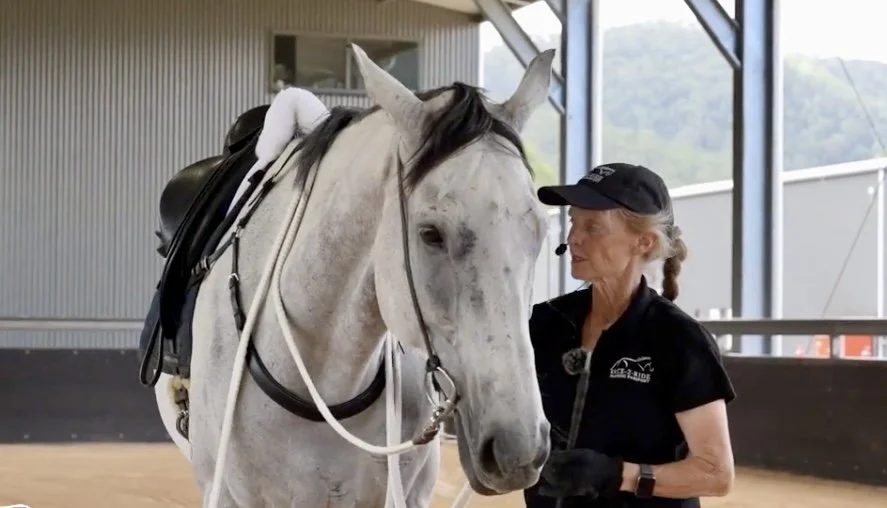
What specifically drew you to OTT retraining, out of everything equitation science covers?
Having owned off-the-track horses since I was ten years old, thanks to my father's background in racing, I've always had a soft spot for them. I absolutely love the breed, but they often get an unfair reputation simply because they are misunderstood. They are trained for a highly specific life on the track, which is entirely different from what we ask of them in the pleasure or sport horse industries. My goal with focusing on OTT retraining has always been to bridge that gap. I want to help people understand how to transition these horses effectively, which ultimately keeps riders safer and significantly improves the welfare of the horses.
That boldness finding in the 2025 paper is one thing (OTTs actually tested as bolder and more confident around new things than other horses, not more reactive, which flips the usual assumption about the breed), but you mentioned E-BARQ is turning up even more on the OTT front since then. What's the most interesting thing you're seeing right now?
The boldness finding was certainly an interesting piece of the puzzle, but what excites me most about E-BARQ is its longitudinal nature. Because owners can return and update their horse's behavioural scores over months and years, we aren't just looking at a single snapshot in time. I am most looking forward to tracking the long-term changes in behaviour as owners implement structured retraining programs like Race-2-Ride. Watching those behavioural scores shift as horses become more relaxed, understood, and adapted to their new lives is where the real story lies for OTT welfare.
One finding that stuck with me: OTTs are less responsive to stop and slow-down signals, and the paper links that to rein pressure on the track. What should an owner actually do differently when they're re-teaching a stop or a half-halt?
It is crucial for owners to understand that OTT horses have often been subjected to large amounts of meaningless and unrelenting rein pressure. It isn't simply that they are less responsive to slow-down signals; it's that they actually don't know them in the context of pleasure riding. On the track, pressure can mean many things, including "go faster." When retraining, you have to start from scratch. I strongly encourage owners to work through a structured process, like the program we use in Race-2-Ride, that teaches each of these foundational signals one at a time in a step-by-step way.
You're clearly flat out with Race-2-Ride right now. What are you hoping it achieves, and where can people go to find out more?
Right now, Race-2-Ride is keeping me incredibly busy, especially as we have people actively working through the training and joining our weekly live sessions! Ultimately, the platform is designed to give owners a clear, step-by-step pathway to retrain their horses without the guesswork. Whether you've just brought a new off-the-track horse home or you've had one sitting in the paddock for years, this course is built for you. You can find all the details and join the community at: https://www.race-2-ride.com
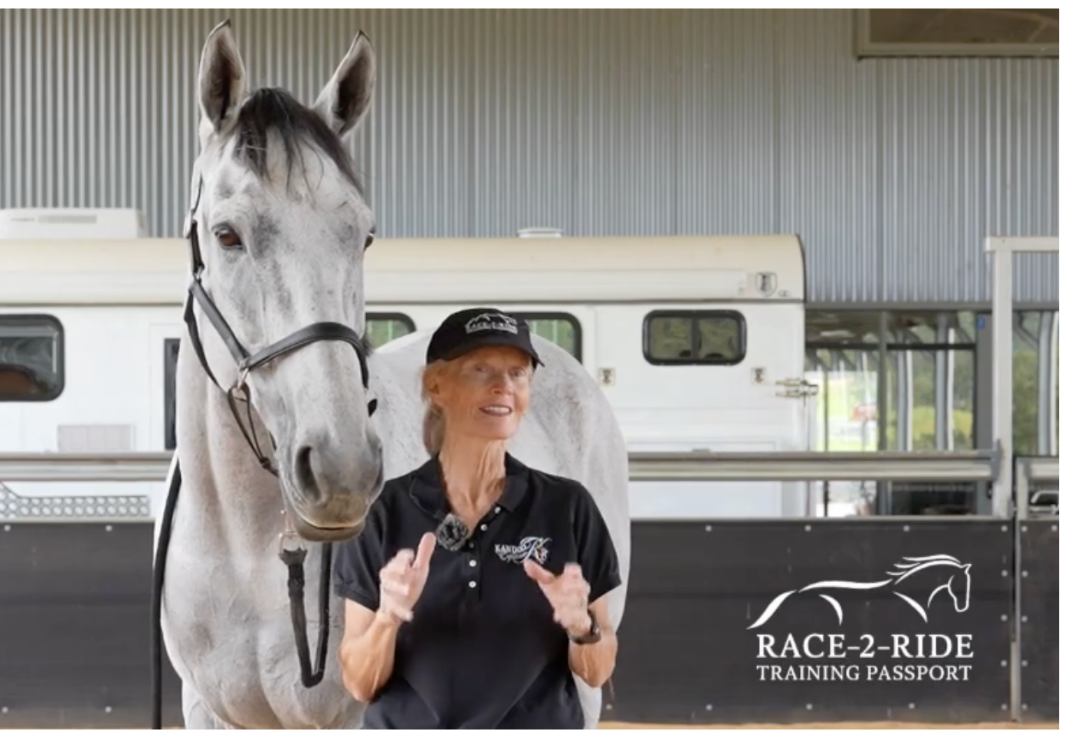
If someone reading this has an OTT in their yard and things feel a bit stuck, what's one thing worth checking or changing this week?
The most common issue I see going wrong in training, and this applies to all horses, not just OTTs, is the handler misjudging the horse's emotional level. If their emotional level is too high, the horse is anxious and can't learn. If it's too low, they might be bored and disengaged. Finding that perfect "Engagement Zone" is the single best thing you can do if you feel stuck in your training. If you want to dive deeper into this, I did a full presentation at Equitana walking through exactly how to regulate that emotional level, which you can watch here:
https://youtu.be/TMI00Wjo_Lo?si=VIEvyS6_WhTnSl4z
Huge thanks to Kate for taking the time to answer all of this in such detail while juggling everything Race-2-Ride currently has her doing. If you've got an OTT of your own at home, we’re sure that there's something in here worth thinking about.