
The One Thing That Unlocks Everything Else You've Been Working On
You've heard it a hundred times. Heels down. Shoulders back. Sit up tall. Core engaged. Here's what almost nobody tells you: breath is what makes all of that easier to access. It's not one more thing on the list, it's the enabler for everything already on it. I mean that literally. Go back and think about the last time you rode a transition that felt sticky, or a sitting trot that felt like you were riding an ironing board, or a moment where your horse felt like he was bracing against you rather than moving with you. Now ask yourself: what was your breath doing? For many riders, when you ask them what their breath was doing, a look of mild confusion crosses their face, or the answer is just "umm."
Breath isn't the soft stuff
I get it. "Breathe" sounds like the kind of advice you'd find on a yoga poster next to a photo of a beach. It sounds like something you do to unwind, not something that has anything to do with your riding. But breath isn't separate from your biomechanics. It's part of your movement, the same way your movement shapes your breath. The two work as one system, not two. Your diaphragm is a muscle. It's attached to your ribs, it moves your spine, and it works as a pair with your pelvic floor every single time you inhale and exhale. When you hold your breath, or when it goes shallow and stuck up in your chest, everything below it finds it harder to stay soft. The pelvis you're trying to "free" so it can follow the horse's motion. The torso you're trying to keep "stable" without going rigid. The nervous system that decides, in a fraction of a second, whether it's safe for your body to soften or whether it needs to brace for impact. Stretching, mobility work, fitness, all of it plays a real part. But all of it is tethered to your breathing patterns. Do the work without addressing the breath behind it, and you're only getting half the return.
Your horse feels the change in you before he feels your aid
This is the part that surprised me most when I started studying it properly. Horses are exquisitely sensitive to muscle tone and pressure through the seat and leg, that's well established. What's less talked about is how fast breath changes that tone. It happens well before you've consciously applied a rein or leg aid. Both the inhale and the exhale have their place, and this isn't guesswork, it's how your nervous system is built. Every inhale briefly pulls back the vagal tone that keeps you calm, which is a normal, healthy part of breathing. The problem is holding there. Hold an inhale through a transition and you're stuck in that slightly up-regulated state with nothing to bring it back down. That's the tone that tips into bracing. An exhale is what switches vagal tone back on, and that's what brings your tone back down through your seat and legs, the very contact points the horse is already reading. Horses pick up on that shift immediately, because responding to changes in pressure and tension is built into their training from the very start. You need to convince your own body that it's safe to release the brace, while keeping the tone in your torso, not to slump but to soften, and breath is one of the fastest ways you have to make that change. That's not a metaphor. That's how the system is wired.
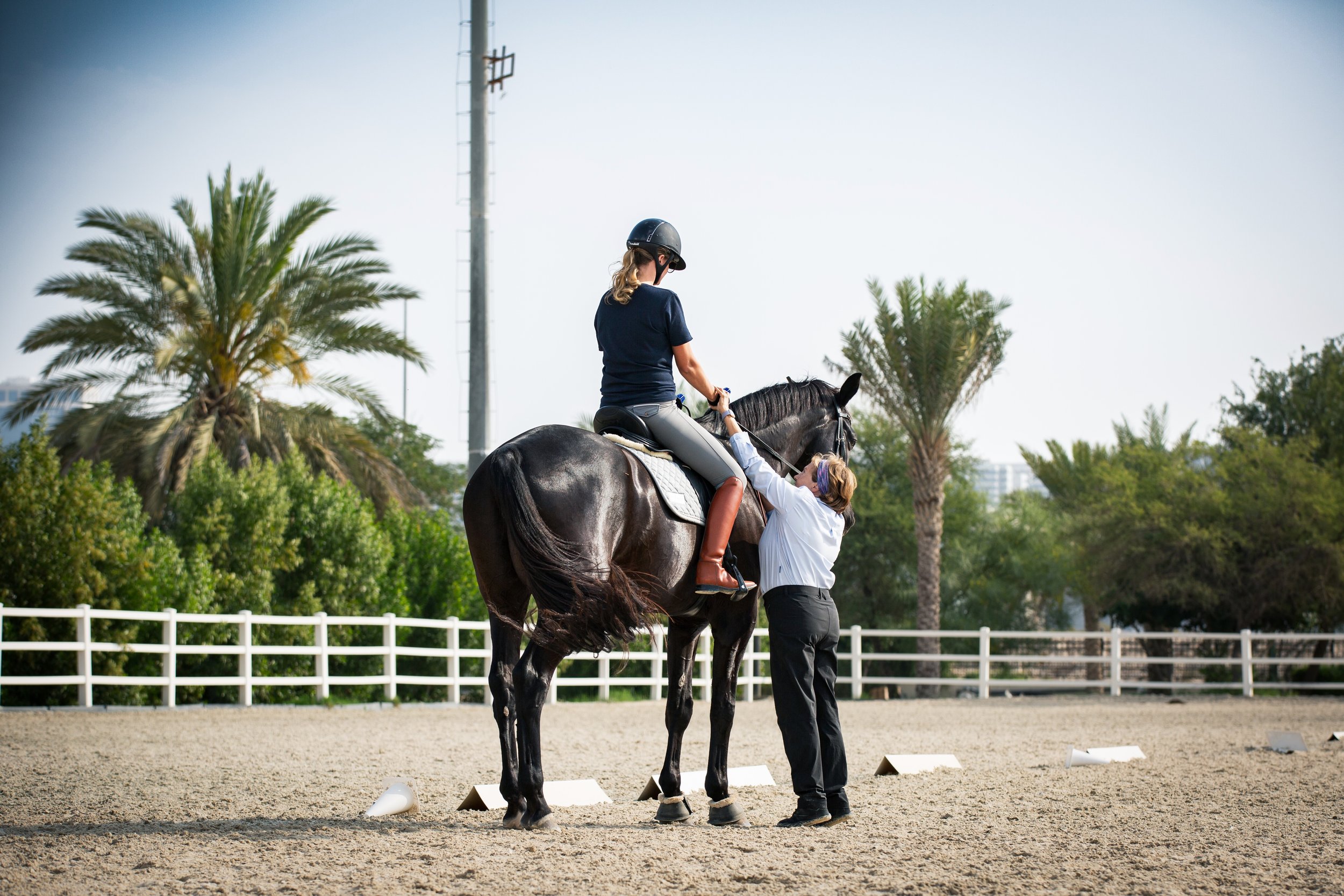
One thing to try today
You don't need to overhaul your riding to start feeling this. Pick one transition. Downward is easiest to start with, trot to walk, or walk to halt. Ride it exactly as you normally would. Your aids don't change. Add one thing: as you ask for it, exhale. Not a sigh, not a dramatic breath out. Let the air leave through slightly parted lips, like you're fogging up a window, on the stride before the transition happens. The exhale isn't replacing your seat or your half halt, it's what lets those aids travel through your body and reach the horse, instead of getting caught in a brace along the way. Most riders feel the difference in one or two tries. The horse comes back softer, rounder through the transition, without the rider adding any extra rein or seat. That's not coincidence. You changed the signal you were sending before you changed anything else.
Why this is worth building on
This one exhale is a small thing. But it points at something much bigger: that the way you use breath affects your nervous system, your pelvis, your torso, and ultimately the rhythm you share with your horse. Four more tools for the same toolkit. Over the coming weeks I'll be writing about each of those in turn: how breath talks to your nervous system before your muscles ever get involved, why "free your pelvis" is really a breathing problem in disguise, how an elastic torso is built on breath rather than bracing, and how syncing your breath to the horse's footfall lets two separate systems find common ground. None of it requires more strength, more flexibility, or more hours in the saddle. It requires noticing something you're already doing around fifteen times a minute, every minute, whether you're in the saddle or on the sofa, and doing it a little more on purpose.
Start with the exhale. The rest follows.
Yolanda Delport is a 4-Star Train Your Seat Biomechanics Coach, accredited Breath Coach, and 30-year dressage rider, coach, and competition steward. She has spent about as much time asking riders “how does that feel?” as she has answering it. Follow along: Instagram @inside.ride.biomechanics · Facebook Inside Ride